
Table of contents:
TL;DR
FPL Draft is a private-league version of Fantasy Premier League where each player can only be owned by one manager. This alone is enough to make it fundamentally different from Classic FPL. Success in Draft comes from understanding player scarcity, draft strategy, waivers, trades, and league dynamics, not budget management or template picks. This guide covers how FPL Draft works from start to finish: the key rules and formats, common mistakes, and why tools like FPL Centre make Draft leagues deeper, more competitive, and more fun.
Classic FPL and FPL Draft share the same scoring system, but that's where the similarities end. In Draft, each player can only belong to one manager within a league. That means there's no budget, no chips, and no way to simply buy your way out of a bad decision.
There are two formats, Classic Draft and Head-to-Head (H2H) Draft, and in both cases the season begins with a draft where managers take turns building their squads from a shared player pool. After that, it's 38 Gameweeks of lineups, waivers, and trades. And the whole game revolves around player scarcity, internal competition, and a much greater dependency on your rivals' decisions.
In this guide, we'll cover:
- What FPL Draft is and how it differs from Classic FPL
- How FPL Draft works
- What the key rules are
- How transactions work
- What principles help you play competitively
What Is FPL Draft and How Is It Different From Classic FPL
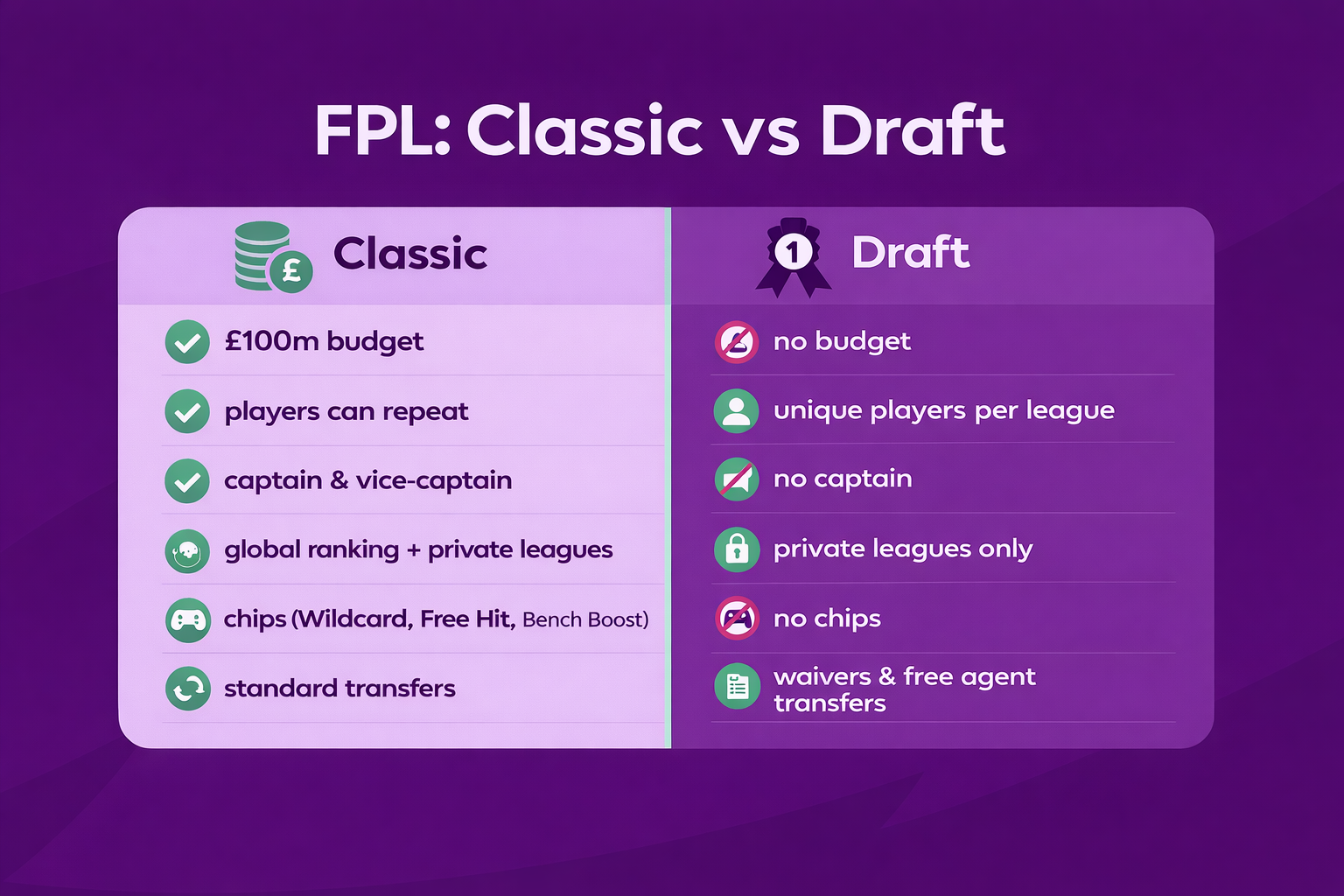
FPL Draft is a Fantasy Premier League format in which managers build their squads through a pre-season draft. Each player can only be selected by one manager within the league.
In Classic FPL, millions of managers can own the same players. When a highly owned player scores big, every manager who owns that player benefits equally. In Draft, that mechanism doesn't exist. If a player has already been drafted by your rival, they’re unavailable to you unless they become a free agent or are traded.
That fundamental difference changes the entire approach to the game.
1. Exclusive Player Ownership
In Draft, each footballer belongs to only one team within the league. This means there are no "template" squads, and a player's value depends on your specific league context. For example, a player considered a mid-level asset in Classic FPL can be strategically crucial in a Draft league.
2. No Budget and No Price Changes
In Classic FPL, managers operate within a budget and navigate player price fluctuations.
In Draft, there is no budget. Draft order determines access, not price. After the draft, all players effectively have equal "value" because they can only be acquired via waivers or trades. This removes the financial optimisation element and shifts the focus to managing scarcity.
3. Different Transfer System
In Draft, you can’t sign any available player at any time. Transfers happen through:
- Waivers
- Free agents
- Trades (if enabled in your league)
Most moves depend on the actions of other managers.
4. League-Based Competition Instead of Global Ranking
Classic FPL is built around global rankings. Draft, by contrast, focuses on internal competition:
- In Classic Draft, managers compete based on total points across the season.
- In Head-to-Head, managers face each other every Gameweek in direct matchups.
This is why FPL Draft requires a different mindset. You can’t copy popular picks from social media or rely on overall ownership percentages. Draft demands adaptation, an understanding of scarcity, and long-term planning in a way Classic FPL does not.
Why League Context Matters More in Draft
In Draft, your only rivals are the managers in your own league. Over time, every league develops its own identity:
- who aggressively targets forwards,
- who consistently wins waivers,
- who performs best in Head-to-Head matchups.
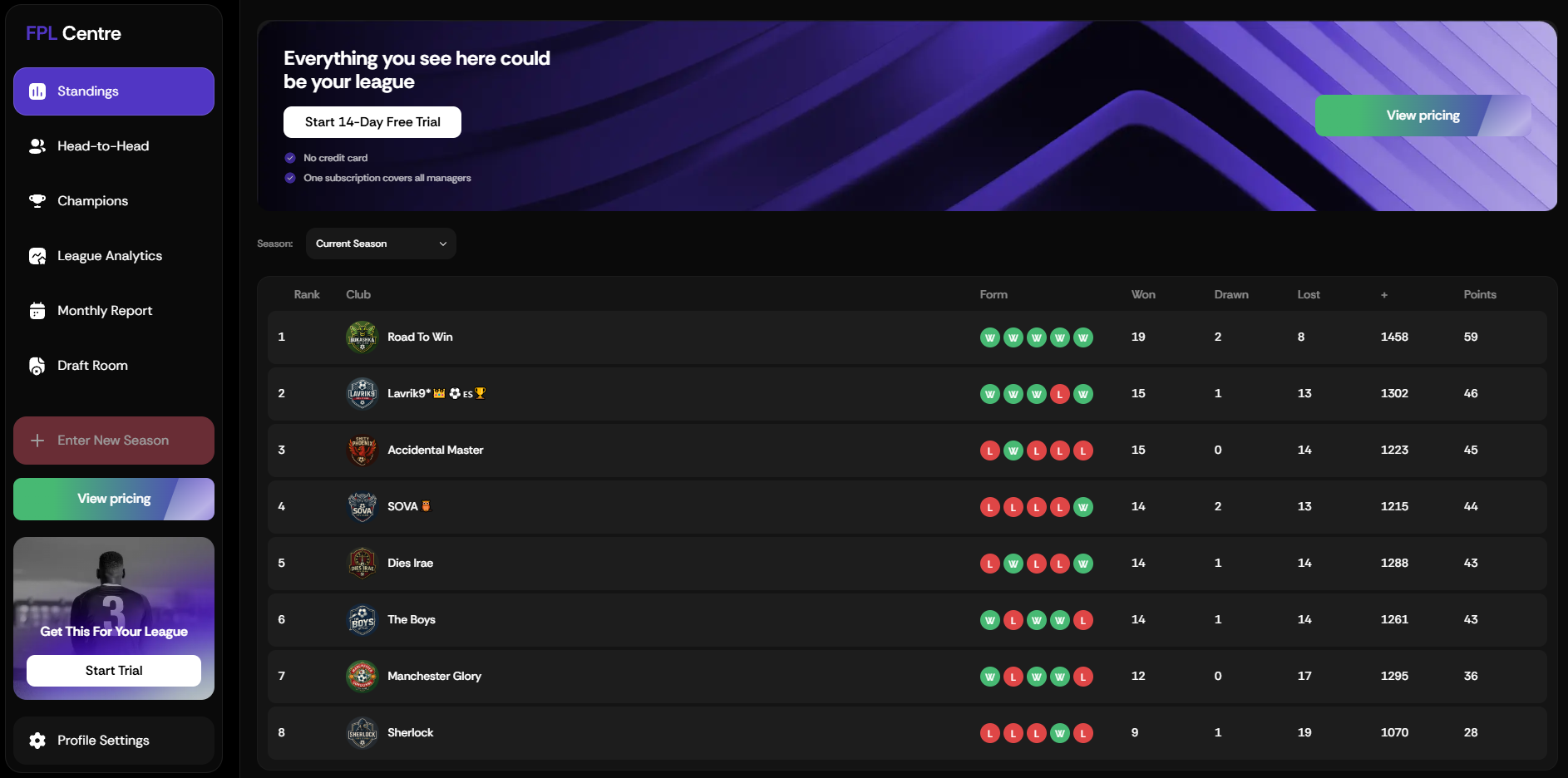
But to track those dynamics over time, you need more than memory. The official platform doesn't provide a long-term league archive. Season-by-season tables, head-to-head match results, manager records, and draft pick history aren’t stored in one accessible place. That's why many Draft leagues use additional tools alongside the official platform. You continue playing on the official FPL website, where you draft and manage your team as usual. Tools like FPL Centre let you store and analyse your league’s long-term history alongside the official game.
Our FPL league history dashboard shows how you can preserve past winners, season standings, head-to-head records, manager statistics, and draft history across multiple seasons. All league members get access to the same shared archive, turning each new campaign into part of your league’s permanent history.
Draft becomes much more engaging when you can see the full competitive dynamic your league has built over multiple seasons, beyond just the current Gameweek.
You can explore the free demo version to see how your league would look with extended statistics and permanently stored history.
How Does FPL Draft Work From Start to Finish
FPL Draft is a season-long format built around several structured stages. To fully understand how it works, you need to look beyond Draft Day and see the entire cycle, from league creation to the final Gameweek.
1. Creating or Joining a League
Each season begins with a simple choice: you either create a private league or join an existing one.
Managers can:
- Create a private league and invite others
- Join via an invite code
- Enter a public league
At this stage, the following are determined:
- Format (Classic or Head-to-Head)
- Number of participants
- Draft date and time
- Trade settings
These shape the difficulty and competitive environment of the season.
Once you’ve joined a league and created your team, many managers connect it to analytics platforms like FPL Centre to track results, analyse matchups, and explore league data. To do this, you’ll need your Team ID. If you’re not sure where to find it, follow this quick guide → How to Find Your FPL Draft Team ID
2. Draft Day
The draft is the process where managers take turns selecting players from the shared player pool.
- The system determines the draft order.
- A snake format is used.
- Rounds continue until all squads are fully filled.
A selected player becomes an exclusive asset of that team. This is the only moment in the season when every player is available to everyone at the same time.
3. Setting Your Lineup Before Each Gameweek
Before each Gameweek, a manager:
- Chooses a starting formation
- Sets the bench order
As in Classic FPL, points are awarded based on real-life performances in Premier League matches.
4. Waivers and Weekly Transactions
After each Gameweek, the transaction window opens.
Managers can:
- Submit waiver claims
- Sign free agents after waivers are processed
- Complete trades (if allowed in the league settings)
Unlike Classic FPL, you can’t sign any player at any time, it depends on player availability and waiver priority.
5. League Table and Season Outcome
Depending on the format:
- In Classic Draft, the winner is determined by total accumulated points.
- In Head-to-Head, standings are based on wins in weekly matchups.
The season runs for all 38 Gameweeks, with no chips such as Wildcard or Triple Captain. That’s why consistency and resource management matter more than short-term spikes.
While the overview above shows the full Draft cycle, each stage has its own rules, mechanics, and strategic nuances that can affect results.
In the sections that follow, we'll break down each phase in detail.
Knowing the rules is one thing, but strategy is everything else. If you want to learn how to actually win your league, read our FPL Draft Strategy & Tips guide
Draft Format and League Setup
To start playing FPL Draft, one manager must create a league on the official Fantasy Premier League website.
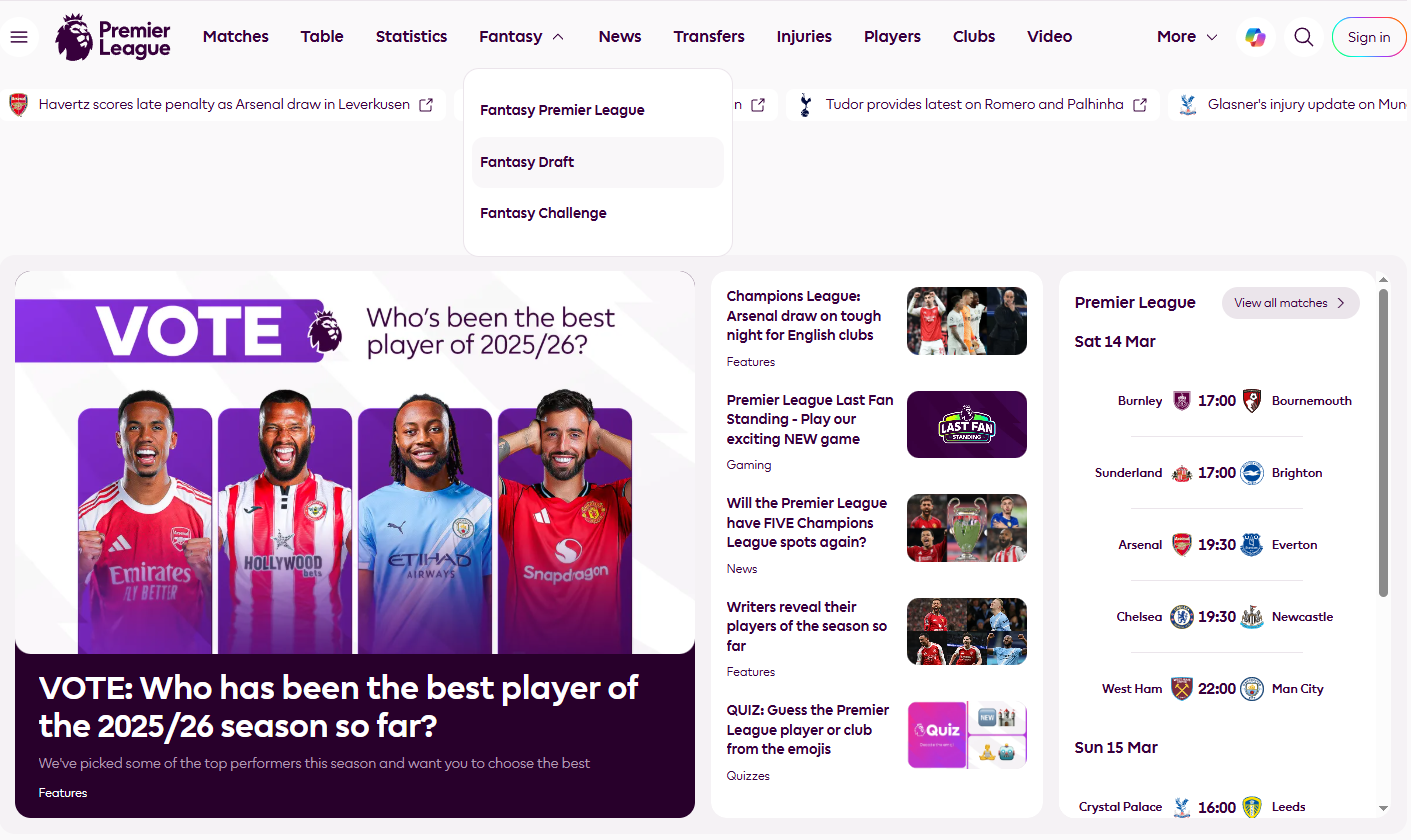
The setup process looks like this:
- Register or log in to your account on the official FPL website
- Select the Fantasy Draft mode
- Click "Create League"
- Choose the league format (Classic or Head-to-Head)
- Set the draft date and time
- Share the invite code with other participants
The person who creates the league automatically becomes the administrator. The admin is responsible for:
- Choosing the format
- Configuring league settings
- Managing participants
- Launching the draft at the scheduled time
Choosing the Draft Format
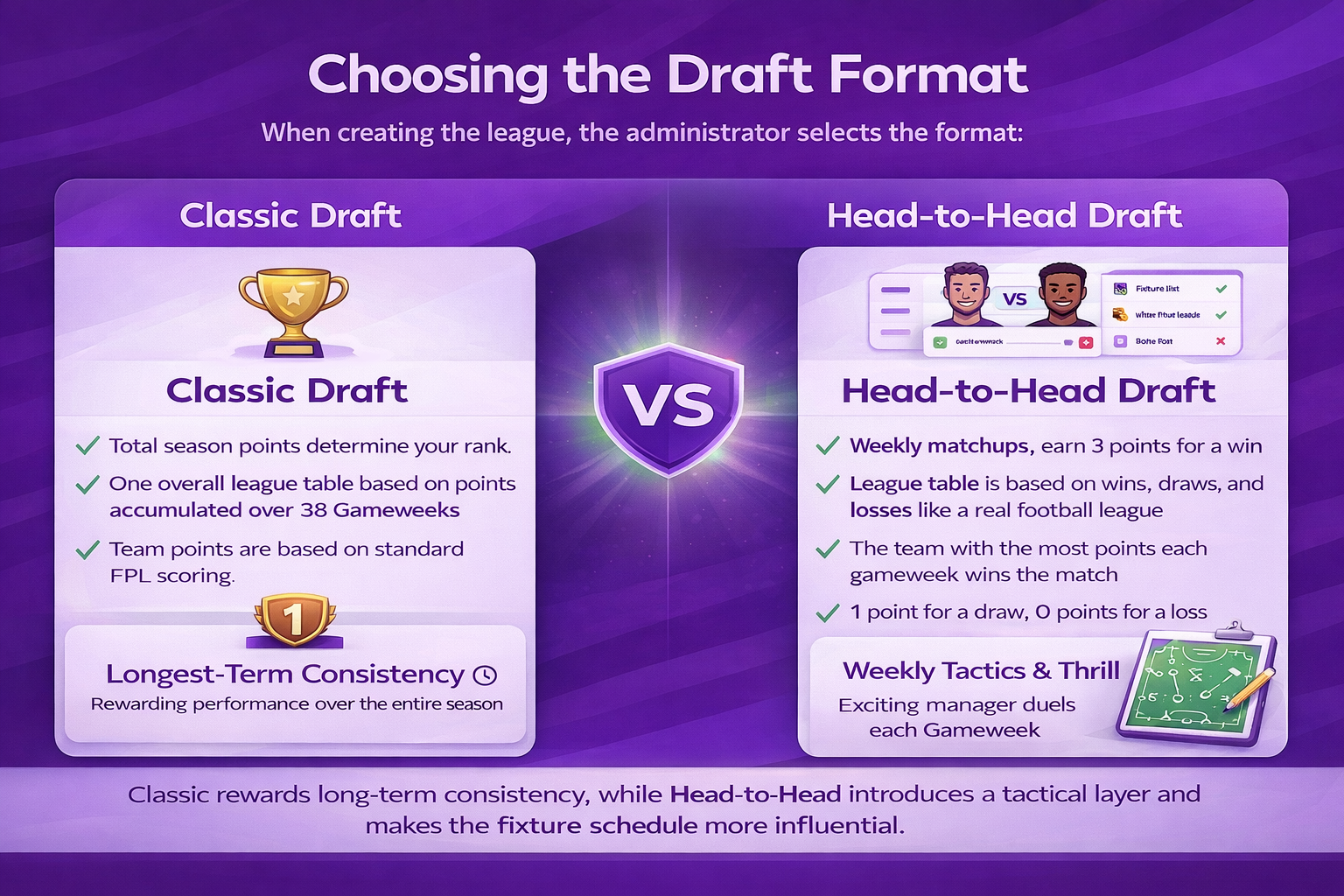
When creating the league, the administrator selects the format:
Classic Draft
In Classic Draft, all managers compete in a single overall table based on the total number of points their teams score across all 38 Gameweeks.
- Each Gameweek, your team earns points according to the standard FPL scoring system (goals, assists, clean sheets, bonus points, etc.)
- These points are added to your season total
- At the end of the season, the manager with the highest total wins
Head-to-Head Draft
In Head-to-Head format, managers face a specific opponent each Gameweek according to the league schedule.
- Each Gameweek, the system pairs two managers in a direct matchup
- The team that scores more points wins the match
- A win earns 3 points
- A draw earns 1 point each
- A loss earns 0 points
The league table is based on match results (wins, draws, losses), not total fantasy points.
Choosing the format changes the nature of the season. Classic rewards long-term consistency, while H2H introduces a tactical layer and makes the fixture schedule more influential.
League Configuration and Strategic Impact
Beyond selecting the format, the administrator also determines:
- The number of managers in the league
- Whether trades between managers are allowed
- How waiver priority is processed
- The time limit per pick during the draft
These configuration choices influence the competitive balance and overall strategy of the league.
When Does FPL Draft Start
FPL Draft launches before the start of the new Premier League season. The exact release date depends on the official Fantasy Premier League launch, which usually takes place in the summer, a few weeks before the first real-life Gameweek.
Once the game is live, managers can create or join Draft leagues and schedule their draft date.
When Does Fantasy Draft Itself Take Place?
The draft itself doesn’t have a fixed global date. Instead, the league administrator determines the timing.
The admin selects a specific date and time, and the draft will automatically begin at that moment. To participate in selecting players, managers must enter the Draft Room via the official FPL website or app at the scheduled time.
Most private leagues hold their draft 1–7 days before the season begins. However, the platform allows leagues to conduct a draft at any point during the season if desired.
League Size, Team Structure and Player Ownership
League size shapes the difficulty of FPL Draft. The difference between a 6-team league and a 12-team league creates two different strategic environments, mainly because of player scarcity.
Minimum and Maximum League Size
In the official FPL Draft format, a league can have:
- A minimum of 2 managers
- A maximum of 16 managers
In practice, however, the most common league sizes are 6, 8, 10, or 12 teams.
- 6–8 teams: A more flexible format with a wider pool of available players
- 10–12 teams: A competitive environment with genuine scarcity
- 14–16 teams: A high-difficulty setup where reliable starters become rare assets
The more managers in the league, the faster guaranteed starters disappear from the player pool.
Standard Team Structure in FPL Draft
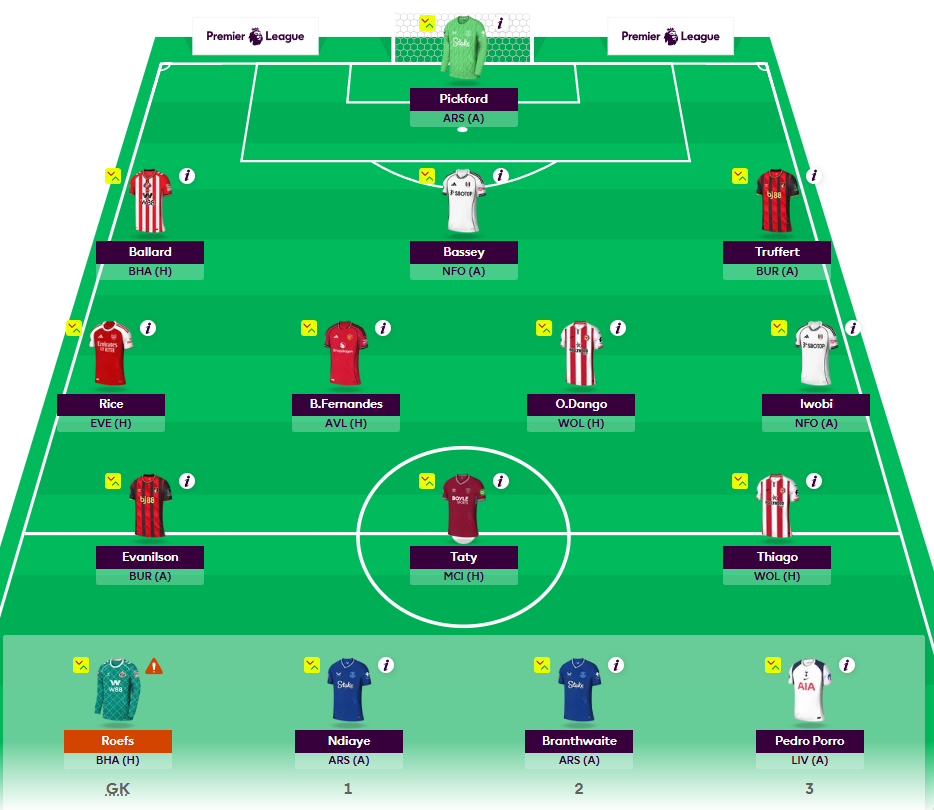
Each Draft team has a fixed squad structure:
- 2 Goalkeepers
- 5 Defenders
- 5 Midfielders
- 3 Forwards
This structure can’t be changed during the season.
Exclusive Player Ownership — The Core Principle of Draft
The defining feature of Draft is exclusive player ownership. Once a player is drafted:
- They become unavailable to other managers
- They can only be acquired via waivers or a trade
- They are removed from the shared player pool
This changes how players are evaluated. In Classic FPL, players are judged based on absolute potential. In Draft, they are judged based on relative value within your specific league context.
What League Size Is Optimal?
The optimal size depends on the experience level of the managers.
- 8 teams: A strong balance between depth and flexibility.
- 10 teams: Competitive without excessive scarcity.
- 12 teams: A full strategic challenge where planning truly matters.
With fewer than 6 managers, the game becomes too "wide" and scarcity barely exists. With more than 12 managers, the difficulty increases and long-term planning becomes critical.
Snake Draft Order and How Picks Are Made and What Happens During the Draft Itself
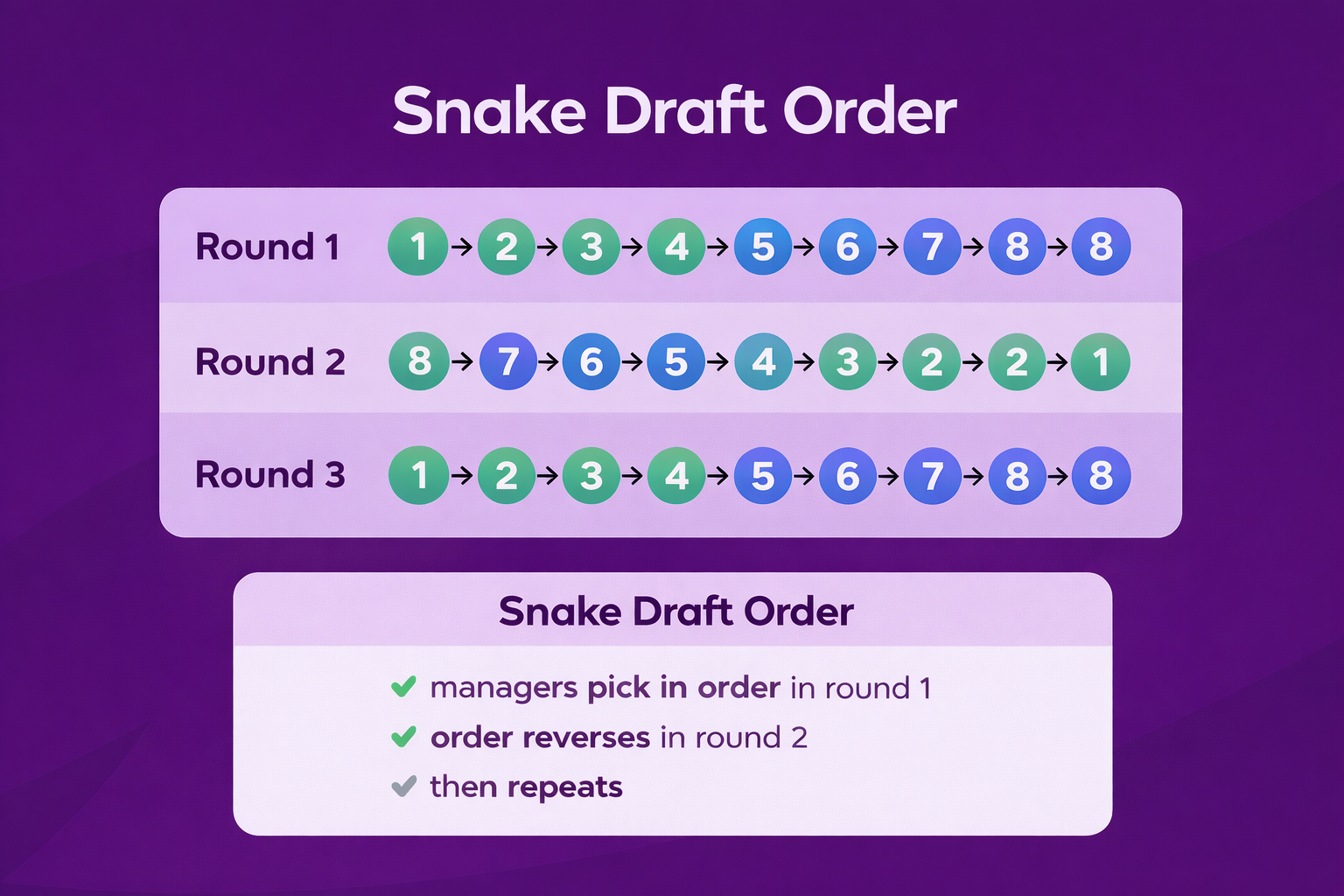
FPL Draft uses a snake draft system. It balances the advantage of early picks and creates strategic tension between rounds. And that tension starts before a single player is picked — draft order is the foundation of proper draft preparation.
What Is a Snake Draft?
In a snake draft, the pick order reverses every round. For example, in an 8-manager league:
- Round 1: 1 → 2 → 3 → 4 → 5 → 6 → 7 → 8
- Round 2: 8 → 7 → 6 → 5 → 4 → 3 → 2 → 1
- Round 3: 1 → 2 → 3 → 4 → 5 → 6 → 7 → 8
And so on, until all squads are filled. This means:
- The manager with the first overall pick waits the longest between their first and second selections
- The manager with the last pick gets two selections almost back-to-back at the turn of the round
Why Are Draft Positions So Important?
The snake format aims for fairness. But draft position still shapes early-round strategy.
Early Picks (Positions 1–3)
Advantage:
- Access to a true elite-tier player
Disadvantages:
- Long wait before the next selection
- Risk of an entire pool disappearing before your next turn
Strategically, managers drafting early should:
- Avoid "reaching" for positional needs too soon
- Think two rounds ahead
Middle Picks (Positions 4–6)
This is often the most balanced draft zone. You avoid the steep quality drop-off between picks without sacrificing access to strong assets. The focus, then, is positional balance.
Late Picks (Positions 7–8 in an 8-team League)
Advantages:
- Two picks with minimal delay (the end-of-round advantage)
- Ability to secure two positions in a single strategic move
Disadvantage:
- No access to the very top tier of players
Managers drafting late often go for a balanced start: two reliable assets that form a strong core.
How Picks Are Made During the Draft
During the draft:
- Each manager has a limited time to make a selection (often around 30–120 seconds), but this varies by league settings
- Picks come from the shared pool
- Each pick assigns the player to that team
If a manager fails to select a player within the time limit, the system may:
- Select the highest-ranked available player, or
- Use the manager's personal watchlist as a priority
To use your draft position as a real edge, read our Snake Draft strategy guide.
Preparing for Your Draft Before Draft Day
Good draft preparation turns reactive managers into competitive ones. Before Draft Day, focus on:
- Analysing positional scarcity (especially forwards and premium defenders)
- Evaluating league size
- Dividing players into tiers (groups of similar value)
- Planning the first 3–4 rounds based on your position in the snake draft
Thinking in Tiers
Most managers draft by name. But tier-based thinking is sharper.
Say there are three forwards left in the same tier and seven picks before your turn. That tier will likely be gone by the time you pick. The move is to secure that tier before it disappears, regardless of which specific player you get.
This requires preparation before Draft day. That means:
- Planning at least two rounds ahead
- Understanding which positions dry up quickly
- Being ready to adapt based on your rivals' selections
Best Practice Before Draft Day
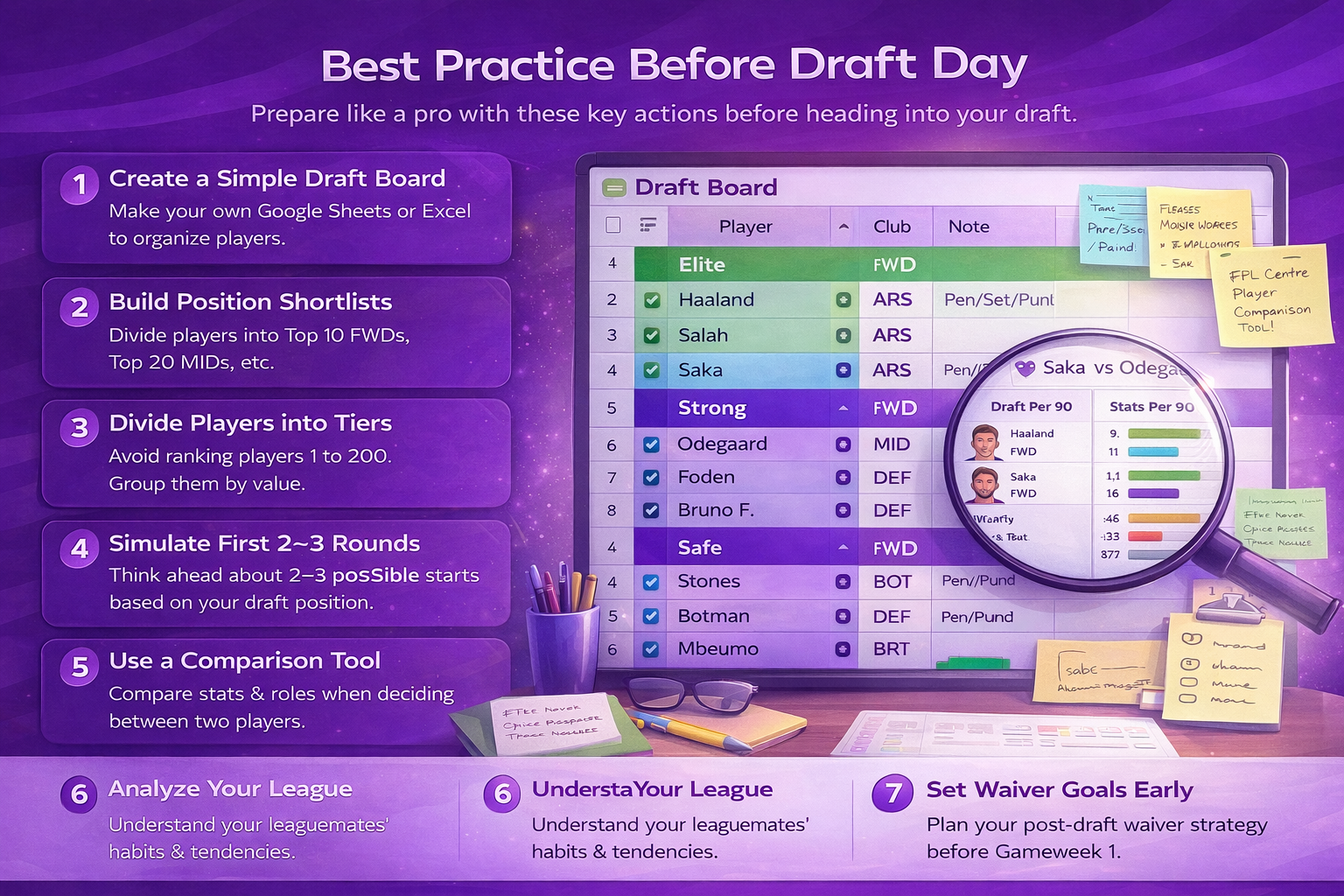
Draft preparation doesn't need to be complicated. But it does need structure.
1) Create a Simple Draft Board Table
First, build your own spreadsheet (Google Sheets or Excel).
In your board:
- Mark players with secure minutes
- Separate rotation risks
- Create tier groups (Elite / Strong / Safe / Risk)
- Add short notes (penalties, set pieces, new role, tactical changes)
2) Build Position-Based Shortlists
Build separate shortlists by position:
- Top 10–15 Forwards
- Top 20 Midfielders
- Top 20 Defenders
- Reliable Goalkeepers
In 8–12 team leagues, scarcity develops differently by position. Knowing where it hits first changes how you draft.
3) Divide Players Into Tiers
Group them by value level:
- Tier 1: Elite Assets
- Tier 2: Strong Starters
- Tier 3: Safe Minutes
- Tier 4: Rotation / Upside Picks
4) Simulate the First 2–3 Rounds
Based on your snake draft position:
- Think through 2–3 possible first-round scenarios
- Identify 2–3 potential second-round targets
- Check which positions might "run out" before your next pick
Even basic simulation reduces panic during the real draft.
5) Use a Player Comparison Tool Before Final Decisions
When you're undecided between two players, use the Player Comparison Tool on FPL Centre to:
- Compare statistical output
- Evaluate minutes security
- Understand role differences
- Make the call with data
This is especially valuable in Rounds 3–6, where decisions are less obvious and margins are smaller.
6) Analyse Your League Context (If It's Not the First Season)
If your league has history, identify:
- Who aggressively drafts forwards
- Who undervalues defenders
- Who takes frequent risks
- Who plays overly safe
In Draft, you're playing against specific people. Use their habits to shape your strategy.
7) Prepare a Waiver Strategy Before Gameweek 1
Before the season even starts, decide:
- Which positions you're willing to upgrade first
- Whether you'll hold waiver priority early on
- Where you're prepared to take short-term risks
The first 3–4 waiver windows often decide more than Draft Day itself. Most managers don't realise this until the season has already started. By then, they're already behind.
For a full breakdown of when to use waivers, when to hold, and how to manage priority: FPL Draft Waiver Strategy
Summary: Draft Preparation Checklist
The managers who prepare win more drafts. Before Draft Day, have:
- Your own structured draft board
- Position-based shortlists
- Clear tier groupings
- First-round scenarios mapped out
- A plan to use comparison tools
- An understanding of your league context
Auto Picks, Watchlists and What Happens If You Miss the Draft
Draft Day is a scheduled event with a fixed start time. But not every manager can always be online. That's why the FPL Draft includes auto picks. Understanding how they work helps minimise risk, even if you miss part of the draft.
What Are Auto Picks?
If a manager doesn't make a selection within the allotted time, the system selects a player on their behalf. Auto picks are typically based on:
- Overall player ranking
- Positional availability
- The manager's personal watchlist, if one has been set
The system doesn’t consider league context, positional scarcity, or your rivals' strategies. It selects the highest-ranked available player. So don't rely on auto picks alone.
What Is a Watchlist and Why Does It Matters?
A watchlist is a personalised list of preferred players that a manager can create before the draft begins. If you fail to make a selection in time, the system picks the highest-ranked available player from your watchlist. So a well-prepared list can soften the impact of missing part of the draft.
What Happens If You Miss the Entire Draft?
If a manager misses the draft, the system builds their squad based on default rankings or their watchlist. The squad will likely be balanced on paper, but strategically thin. But, the Draft is only the starting point. The season lasts 38 Gameweeks, and active waiver management can improve even an auto-drafted squad.
Can You Recover After a Poor Draft?
Yes. And missing one round isn't a disaster, but with preparation you can strengthen your position. And the season itself creates opportunities. In most leagues:
- Some undrafted players emerge as key assets during the season
- Early injuries shift team dynamics
- Active management can offset a weak draft
FPL Draft Rules You Need to Know
FPL Draft uses the same scoring system as Classic FPL, but the team management structure is different.
No Budget and No Price Changes
In Classic FPL, almost every decision runs through budget management. Draft removes that.
- Draft order determines who you can pick, not budget
- No prices, no price rises, no drops
- You build your squad without any financial constraints
The draft is the only moment every player is available to all managers at the same time. After that, players are assigned to individual teams, though they can change hands via waivers or trades.
Fixed Squad Structure
Each team must have:
- 2 Goalkeepers
- 5 Defenders
- 5 Midfielders
- 3 Forwards
The squad structure is fixed throughout the season, but the players within it can change via waivers and trades.
Weekly Lineup and Formation Rules
Before each Gameweek, a manager must:
- Select a starting XI
- Follow valid formation rules
- Set the bench order
In Draft, there is no captain and therefore no double points. All players earn standard points.
Valid formations follow the same core constraints as Classic FPL:
- Minimum 3 defenders
- Minimum 1 forward
- Maximum 5 players from one outfield position
Automatic Substitutions in FPL Draft
Automatic substitutions work the same way as in Classic FPL. But with no captain and a limited player pool, missing a starting player hurts more. The system replaces them automatically if they don't play a single minute in a Gameweek. Then the first eligible bench player comes in, provided the formation remains valid. That is, bench order is critical: your first substitute is your insurance policy, and in larger leagues, squad depth often matters more than a single elite draft pick.
Transactions in FPL Draft Explained: Waivers, Free Agents and Trades
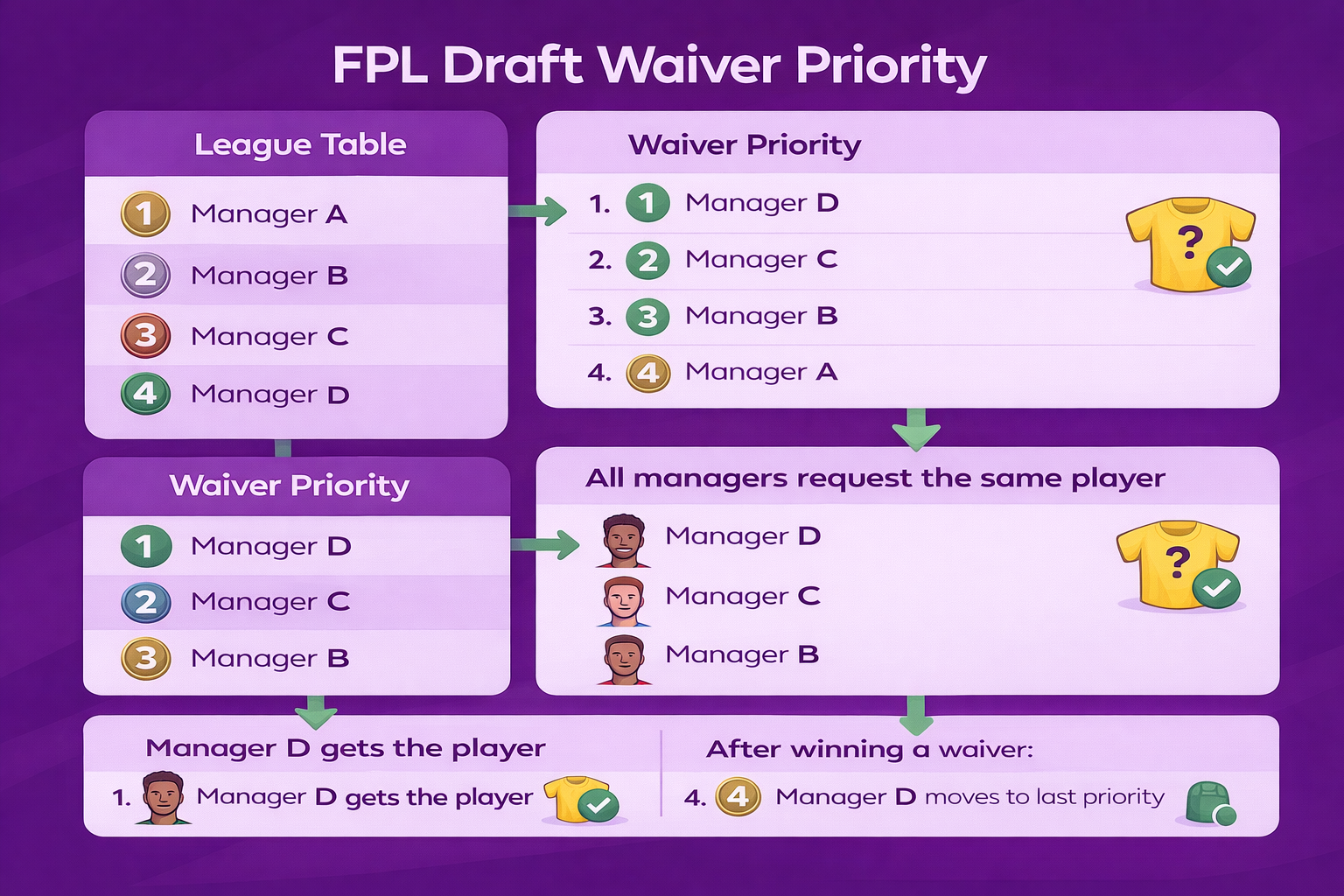
All post-draft transfers go through waivers, free agents, or trades. For everything on waivers and transaction timing: FPL Draft waivers explained
Managers submit claims for available players. If multiple teams request the same player, the player goes to the manager with higher waiver priority, typically the manager ranked lower in the standings. After a successful claim, that manager moves to the back of the priority order.
Once waivers are processed, remaining players become free agents and can be signed freely, on a first-come, first-served basis.
In some leagues, the administrator enables trades between managers. In that case, one manager proposes an exchange, offering one of their players for another manager's player. The trade goes through only if both sides agree, with some leagues requiring additional confirmation.
What Are the Deadlines?
Every Gameweek has two deadlines in FPL Draft.
Waiver Deadline
Waivers close before each Gameweek begins. Processing times may vary by league settings, but the cutoff is always before kick-off. After waivers are processed, the free agent window opens, allowing managers to sign available players freely.
Gameweek Deadline (Lineup Lock)
The final deadline for adjusting your lineup is around 90 minutes before the first match. After that:
- No changes to your starting XI
- No bench order adjustments
- No new waiver claims for that Gameweek
- No movement until the Gameweek ends
Why Deadlines Matter More in Draft
Deadlines hit harder in Draft than in Classic because:
- You can't replace a player after late injury news
- Waiver decisions need planning in advance
- Bench order can decide a matchup through automatic substitutions
In Draft, preparation and timing matter as much as the players you pick.
Scoring Formats in FPL Draft (Classic vs Head-to-Head)
FPL Draft uses the same player scoring system as Classic FPL. Goals, assists, clean sheets, bonus points, yellow and red cards: all scored according to the standard Fantasy Premier League rules. The format you choose, though, determines how the league table works.
Player Scoring System (Same in Both Formats)
Regardless of format, players earn points based on their real-life performances in Premier League matches.
- Points update live during matches
- Bonus points land after all Gameweek matches are completed
- Occasionally, points are adjusted after the Gameweek due to official reviews or corrections
Classic Draft: Season-Long Points Table
Consistency across the full season is what wins it.
- Each Gameweek, your team scores fantasy points
- Those points go towards your cumulative season total
- After 38 Gameweeks, the manager with the highest total wins
Head-to-Head Draft: Weekly Matchups
Managers face a specific opponent each Gameweek according to the league schedule.
Each Gameweek:
- The system pairs two managers in a direct matchup
- The manager who scores more fantasy points wins the match and earns 3 points
- A draw awards 1 point to each manager
- A loss earns 0 points
The league table runs on match results, not total fantasy points. Classic Draft is built on consistency. Head-to-Head, though, opens up a few tactical options:
- You can take calculated risks against strong opponents
- You can make "defensive picks" to neutralise a rival's strongest player
- The fixture schedule carries more weight
Basic FPL Draft Strategy for Beginners and How to Play FPL Draft Step by Step
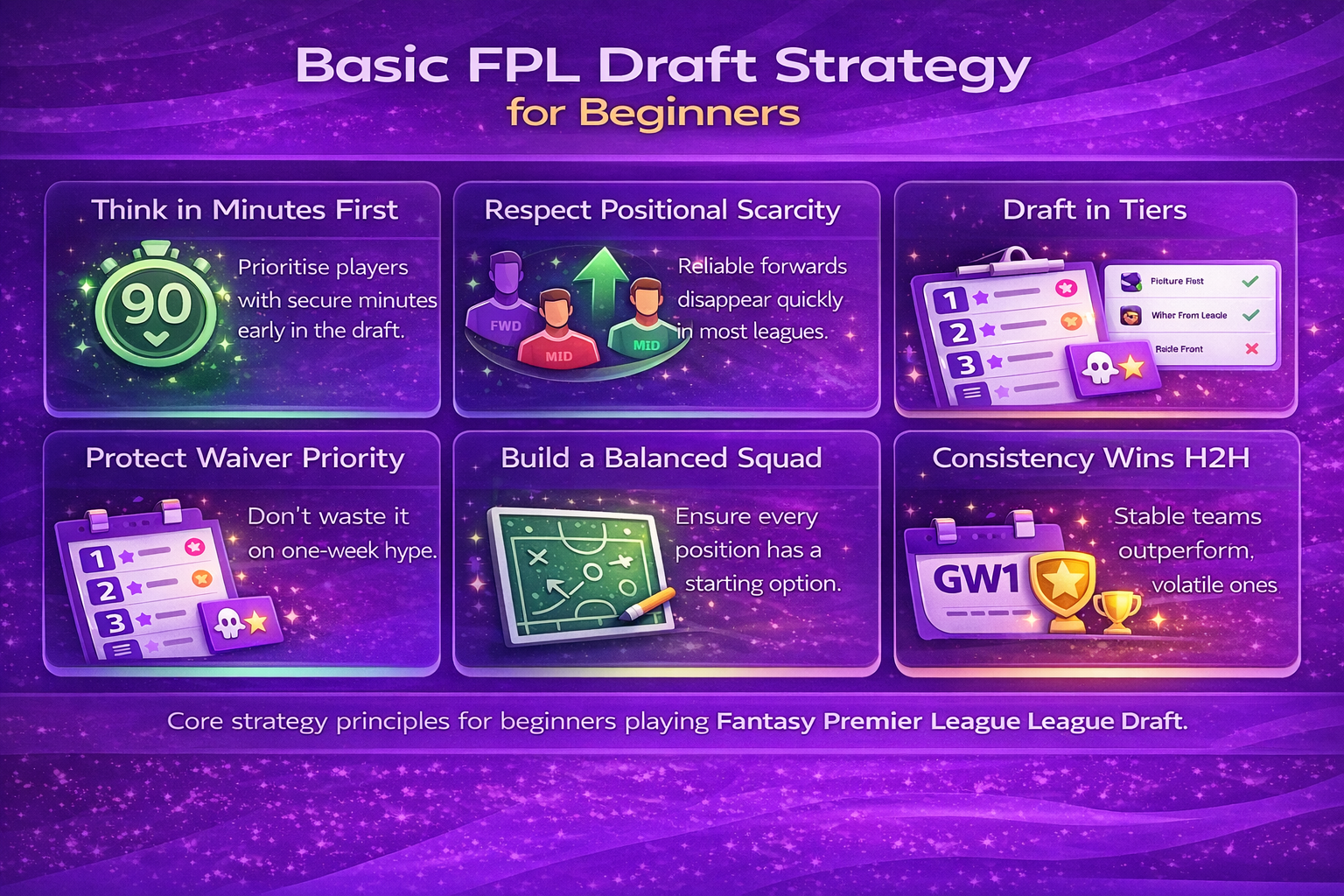
In Draft, there's no reset button: no budget flexibility, no chips, no instant squad rebuilds. The core task is to manage scarcity better than your opponents. To win your league, read our full FPL Draft Strategy & Tips guide
1) Think in Minutes First, Points Second
In Classic FPL, you can afford to wait on a high-upside player. In Draft, that's often a luxury. Start with players who are guaranteed to play:
- Prioritise players with secure minutes
- Avoid heavy rotation risks and "maybe they'll break through" picks
A player who plays 85–90 minutes is often more valuable than a flashy substitute with potential.
2) Respect Positional Scarcity (Especially Forwards)
In most leagues, scarcity hits forwards and reliable attacking players first. Draft 3–4 top midfielders and you'll likely end up with non-starting forwards later. Leagues are won with starting players, not big names.
3) Draft in Tiers
If a positional tier is about to disappear and your next pick is far away, take the player now. The tier matters more than the name.
4) Protect Your Waiver Priority
Beginners often burn it after one big Gameweek performance or social media hype. Strong managers save waiver priority for situations like:
- A new starter emerging due to injury or transfer
- A managerial change that shifts a player's role
- A clear season-long asset becoming available
5) Build a Functional Squad
After Draft Day, you should have:
- A functional starting option at every position
- At least one flexible rotation piece
- A bench that can actually contribute
In Draft, players who play regularly and contribute points are worth more than big names who don't.
6) In Head-to-Head, Consistency Beats Peaks
Stability wins more often than volatility. In H2H, you can win a season without having the highest total points if you:
- Win matchups week by week
- Avoid Gameweeks ruined by non-starters
- Use your bench and deadlines properly
7) The Draft Is Only the Start
Early rounds matter. But seasons are often decided by 2–4 waiver moves and steady weekly management. Stay active after Draft Day.
Common FPL Draft Mistakes and How to Avoid Them
FPL Draft punishes poor decisions more than Classic FPL. There is no wildcard, no budget flexibility, no easy reset. Every mistake has longer-term consequences.
1) Drafting Big Names Instead of Secure Starters
Beginners often chase reputation over guaranteed minutes. A "high-potential" player from a top club looks appealing, but rotation risk and positional competition can reduce their value in Draft. A player who plays 85–90 minutes is more valuable than a bench "star" with theoretical upside.
How to avoid it: In the early rounds, prioritise secure minutes.
2) Ignoring Positional Scarcity
Positions vary in depth. In most leagues, starting forwards, attacking full-backs, and reliable attacking midfielders disappear first. Stack midfielders and postpone forwards, and you'll end up with non-starting strikers in the later rounds.
How to avoid it: Before the draft, count how many true starters exist at each position. Scarcity is a numbers game.
3) Reaching Too Early
A "reach" is selecting a player earlier than necessary. Common reasons include:
- Fear of "they won't make it back to me"
- Emotional attachment
- Club bias
In a snake draft, reaching is costly because you sacrifice higher-value options.
How to avoid it: Think in tiers. If your target belongs to a large tier, they will likely still be available at your next pick.
4) Treating Draft Like Classic FPL
In Classic, you can:
- Sell a player
- Buy another
- Rebuild your team
In Draft:
- A player may be unavailable all season
- A rival may hold the player you need all season
How to avoid it: You're playing against specific managers. Think about your league, not the overall market.
5) Burning Waiver Priority on Short-Term Hype
Beginners often spend high waiver priority after a single goal or a spike in social media hype. When an important asset appears (injury replacement, major transfer), that window is already gone.
How to avoid it: Save waiver priority for season-long value.
6) Neglecting Bench Structure
Many managers ignore the bench. In Draft, that's dangerous because:
- Automatic substitutions are frequent
- Premier League rotation is high
- One dead slot can cost you a matchup
How to avoid it: At least one bench player should regularly get minutes. The bench is your insurance policy.
7) Overreacting After One Bad Gameweek
Draft is a long game. Panicking after one poor Gameweek and reshuffling half your squad is rarely productive. In Head-to-Head, losing with 60 points in one Gameweek tells you very little about your squad.
How to avoid it: Evaluate trends, role stability, and minutes across multiple Gameweeks.
8) Ignoring League Context
Draft is a game played against specific people. Common mistakes include:
- Not analysing opponents' squads
- Ignoring their positional weaknesses
- Failing to use trades strategically
How to avoid it: Think beyond your own team. Consider the balance and structure of the entire league.
FPL Draft vs Classic FPL — Which Format Is Right for You
|
Aspect |
Classic FPL |
FPL Draft |
|
Player ownership |
Unlimited |
Exclusive |
|
Budget |
Yes |
No |
|
Price changes |
Yes |
No |
|
Captain |
Yes |
No |
|
Chips |
Yes |
No |
|
Competition type |
Global ranking |
Private league competition |
|
Difficulty to fix mistakes |
Relatively easy |
Much harder |
If You Prefer Global Competition and Flexibility — Choose Classic FPL
Classic offers flexibility, recovery options, and access to the global player pool. It’s the right choice if:
- You want to compete against millions of managers worldwide
- You enjoy climbing a global overall rank
- You like managing a budget and navigating price changes
- You enjoy chip strategy (Wildcard, Free Hit, Bench Boost, etc.)
- You want the ability to rebuild your squad during the season
If You Prefer Direct Rivalry and Scarcity — Choose FPL Draft
Draft is about outmanoeuvring specific opponents within your own league. It’s the better fit if:
- You play in a small group of friends or colleagues
- You enjoy unique squads with no duplicates
- You value long-term rivalry and league history
- You're intrigued by scarcity-based strategy
- You want every pick to truly matter
Why FPL Draft Is More Fun With the Right Tools
FPL Draft may seem simple on the surface. But with each new season, your league becomes more competitive. Managers start reading positional scarcity, using waivers strategically, and studying opponents. At some point, you need more than intuition.
Over time, Draft is a closed ecosystem. You're competing against specific people who know your tendencies and your weaknesses. Decisions start depending on the structure of the entire league as much as a player's form.
That's where the right tools make a difference. Objective player comparison, for instance, helps you make decisions based on role, minutes, and consistency.
To compare players before your next pick or waiver move: Compare FPL Players: Best FPL Decision Tool for Draft & Classic
That's why we built the free FPL Draft Player Comparison Tool: evaluate two or more players before a draft pick or waiver move and find who fits your squad.
Draft goes beyond choosing players. It's about your league. The rivalries. The inside jokes. The winning streaks. The painful defeats.
FPL Centre creates a home for all of that: a dedicated space where season history, match results, and manager statistics are all preserved. Every season is saved, and the record goes well beyond the official site's weekly table. Every manager in your league can access the full history. And over time, that shared history deepens the rivalry.
Try FPLCentre Free Demo and Prepare Smarter for Your Draft
FPL Centre is a companion to the official Fantasy Premier League platform. You continue to play on the official FPL website, run your draft there, and manage your squad as usual.
We store your league's season history, analyse each manager's performance, and surface data the official platform doesn't track. You can track seasonal trends and see how decisions play out over time. With every season, your league gets deeper and more competitive.
Try the free demo version and see your league's full history preserved and analysed in one place.
FAQ
What is FPL Draft?
FPL Draft is a version of Fantasy Premier League where every player can only be owned by one manager at a time within a league. Managers select players in a draft, usually before the season starts, and each squad is unique within that league.
How does FPL Draft work?
In FPL Draft, managers join a private league and select players in a snake draft, typically before the season begins. After the draft, they set their lineups each Gameweek and improve their squads through waivers, free agents, and trades.
What is a fantasy football draft?
A fantasy football draft is the process where managers take turns selecting players to build their teams, usually before the season starts. Each player can only be selected once within the league.
What are the main FPL Draft rules?
Each team has 15 players: 2 goalkeepers, 5 defenders, 5 midfielders, and 3 forwards. Draft has no budget, no chips, and no captain. Managers compete either in a head-to-head format or by total points over the season.
How do transactions work in FPL Draft?
Transactions happen through waivers and free agent signings. Managers request available players, and if multiple managers want the same player, the waiver priority system decides who gets them.
When do FPL Draft transactions go through?
Waiver transactions usually process shortly after the Gameweek deadline passes. Once waivers are processed, managers can sign free agents until the next Gameweek deadline.
What are automatic substitutions in FPL Draft?
Automatic substitutions replace players in your starting lineup who didn't play in the Gameweek. The system brings in players from your bench according to the FPL formation rules.
How to play FPL Draft?
To play FPL Draft, join or create a private league, draft your players, set your lineup each Gameweek, and manage your squad through waivers and free agents.
.jpg)