Table of contents:
TL;DR
Waivers are where FPL Draft leagues are actually won.
You can’t sign players instantly — every move goes through a system, and your priority is limited. Once you use it, you drop to the bottom.
That’s why not every transfer is worth it.
The key is simple: don’t try to win every waiver — win the right ones.
Most managers lose value by reacting to points, chasing short-term form, or ignoring what other managers will do.
The edge comes from understanding timing, competition, and acting only when a move truly improves your team.
Most managers think leagues are won in the draft. They’re not.
The draft only gives you a starting point. The real edge appears during the season — and the most important tool you have is waivers.
This is where new players appear, roles change, injuries open opportunities, and managers either react too late or act at the right moment.
The problem is simple: most managers don’t have a waiver strategy. They react instead of thinking ahead.
If you want to understand how the waiver system actually works — deadlines, priority, and transactions — read this first:
FPL Draft Waivers Explained
If you’re new to the format or want a full breakdown of how FPL Draft works, start here:
FPL Draft Explained Guide
And if you want to improve your overall draft approach before the season even starts:
FPL Draft Strategy & Tips
In this guide, we focus on what happens after the draft — how to actually use waivers to gain an advantage.
The Core Principle of FPL Draft Waiver Strategy
The biggest mistake managers make is trying to win every waiver.
That’s not the goal. The goal is to win the right ones.
Every time you successfully claim a player, you drop to the bottom of the priority order. Your priority is limited, and once it’s gone, you lose your advantage in future decisions.
That means every move has a cost.
So the real question isn’t “is this player good?”
It’s “is this worth using my priority?”
Scenario: New Player or Role Change
The most valuable waiver moments don’t come from points — they come from change.
A new signing, a player returning from injury, or someone suddenly becoming a starter can completely shift value.
Most managers hesitate here. They wait for confirmation. They want to “see one more game”.
By the time they do, the player is already gone.
To make these decisions properly, you need context — who is actually starting, who is injured, and how teams are lining up. That’s exactly where team news and expected lineups become critical:
Predicted Lineups EPL
If the role is clear and the minutes are there, waiting usually means missing out.
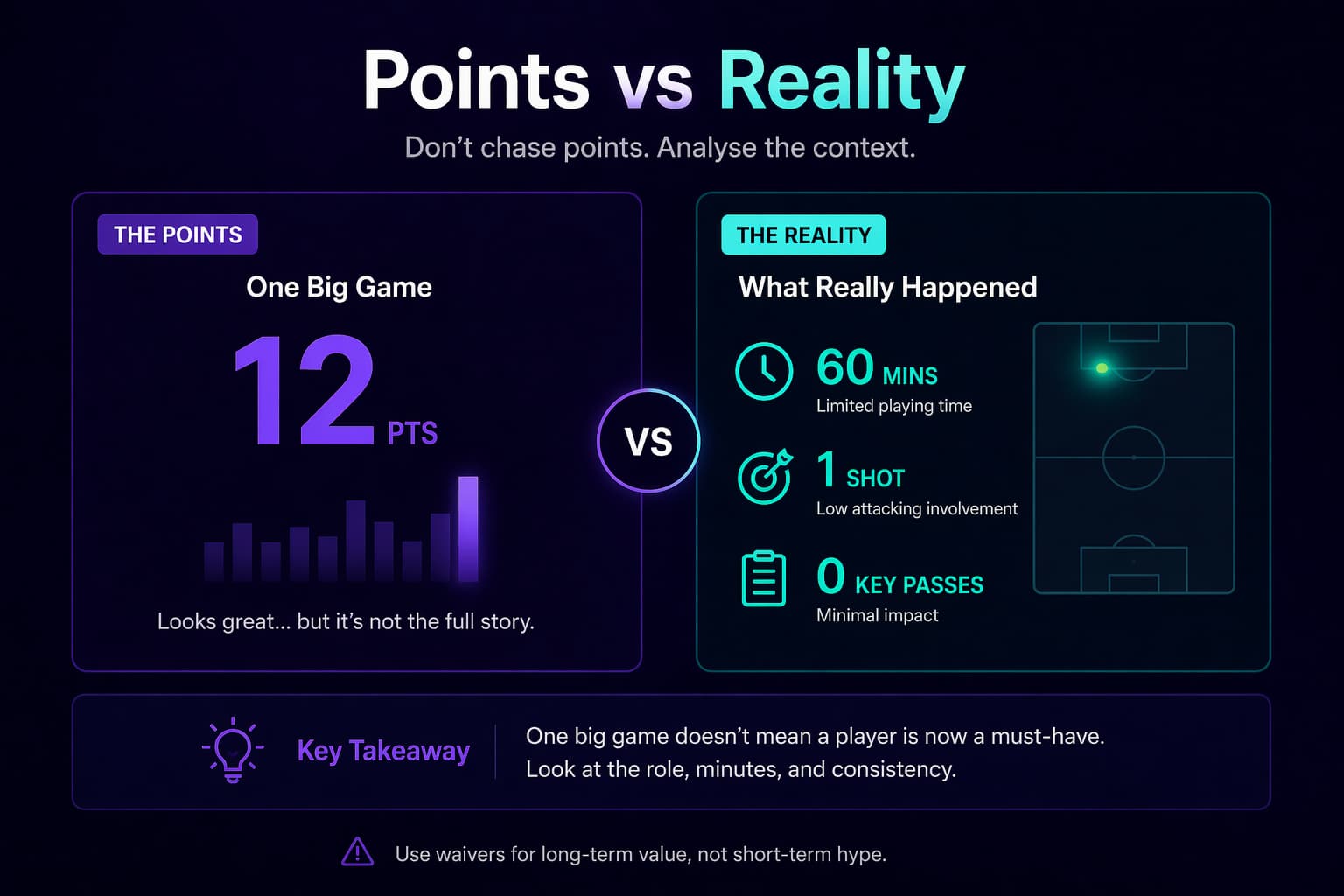
Scenario: One Big Performance
This is the most common trap in FPL Draft.
A player scores big, everyone sees it, and the instinct is to go for him immediately.
But in most cases, this is just a one-off performance, not a real change in role or value.
Strong managers don’t chase points — they analyse context.
Is he starting regularly?
Did his role actually change?
Is he really better than your current player?
If the answer isn’t clear, it’s usually not worth using your waiver.
Scenario: Small Upgrade
Sometimes a player becomes available who is slightly better than your current option.
Not a game-changer — just a marginal improvement.
This is where many managers waste their priority.
They use a waiver for a small upgrade and lose the ability to act later when a real opportunity appears.
In most cases, these moves are better left for free agents.
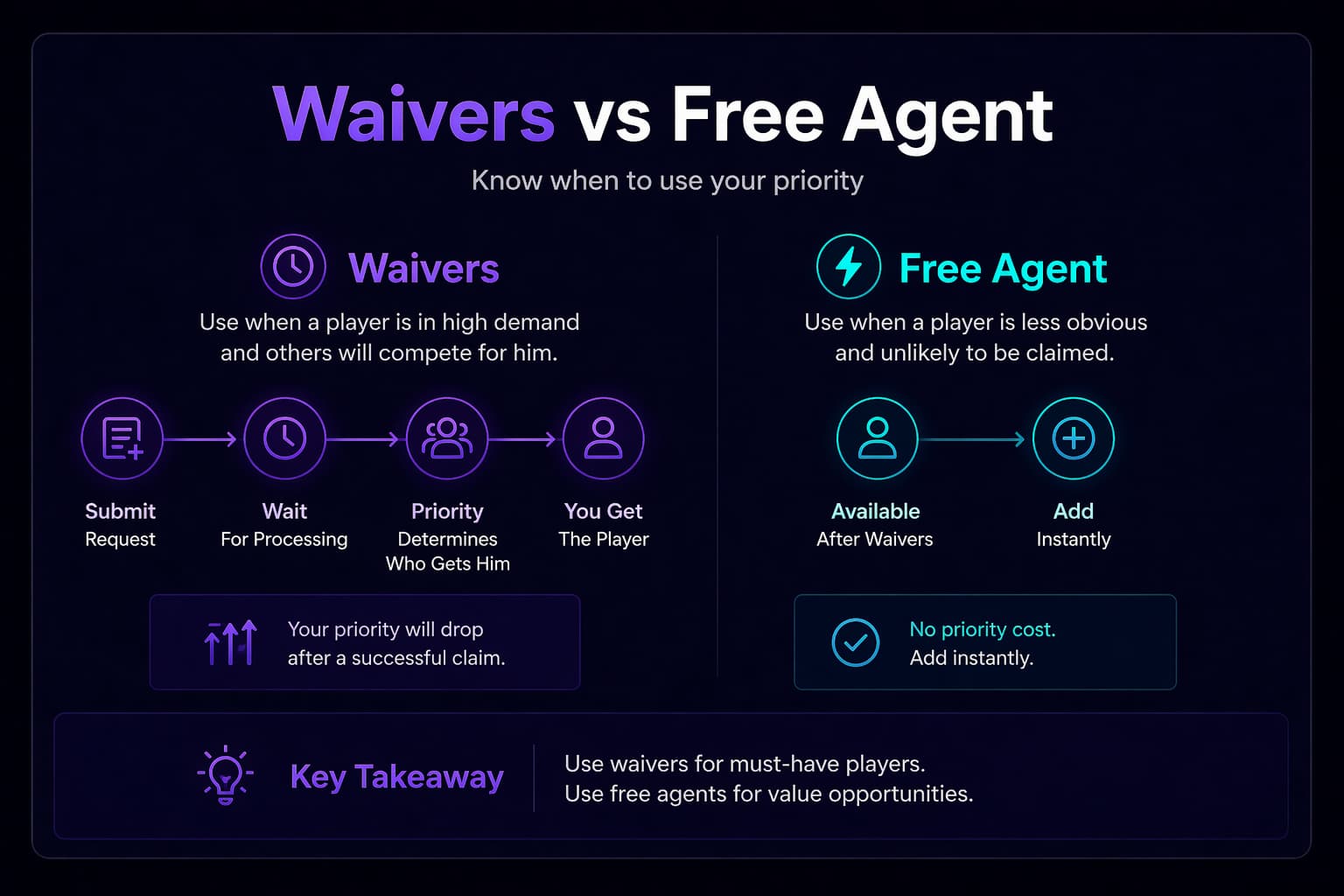
Waivers vs Free Agents: The Key Decision
Every week, you’re making the same decision: act now or wait.
If a player is obvious and valuable, others will go for him — and you need to use a waiver.
If he’s less obvious, patience often gives you the same result without spending priority.
The difference between average and strong managers is understanding when to act and when to wait.
Early Season vs Late Season Waiver Strategy
Waiver strategy changes as the season progresses.
At the start of the season, there is more uncertainty. New players emerge, roles are unclear, and unexpected opportunities appear. This is where being aggressive can pay off.
Later in the season, things stabilise. Fewer surprises, fewer breakout players.
At that point, priority becomes even more valuable, and decisions need to be more selective.
It’s not about making more moves — it’s about making better ones.
Making Better FPL Draft Decisions
Every waiver decision comes down to the same questions.
Is this short-term or long-term value?
Are the minutes secure?
Is this actually improving my starting team?
The problem is that most managers rely on instinct, especially when time is limited.
Better decisions come from better context and faster comparison.
That’s where tools like
Compare FPL Players tool
become useful — helping you move beyond points and understand role, minutes, and consistency.
Playing Against the League, Not Just the Game
Waivers are not just about your team.
They affect the entire league.
When you submit a claim, you’re competing with other managers. The more obvious the player, the more competition there will be.
At some point, FPL Draft stops being about players and becomes about decisions.
Most managers focus only on improving their own team.
But the real edge comes from understanding the league.
You can strengthen your squad, block opponents, and anticipate their moves.
That’s where leagues are actually won.
To see the bigger picture — not just your team, but your entire league — use
FPL Centre
Final Thought
Waivers are not just a transfer system.
They are the most important decision-making tool you have during the season.
You don’t win your league by winning every waiver.
You win it by winning the right ones.
FAQ
What is waiver strategy in FPL Draft?
Waiver strategy is how you decide when to use your waiver priority to sign players. It’s not about making the most transfers — it’s about making the right ones at the right time.
When should you use a waiver in FPL Draft?
You should use a waiver when a player offers a clear upgrade to your starting team, especially if the opportunity comes from a role change, injury, or new signing. If the move is obvious, other managers will go for it too.
When should you NOT use a waiver?
You should avoid using a waiver for small upgrades or short-term performances. If a player is not obvious or high demand, you can often get him later as a free agent without using your priority.
How does waiver priority work in FPL Draft?
Waiver priority determines who gets a player when multiple managers request him. It is usually based on league position, with lower-ranked teams getting higher priority. After a successful claim, you move to the bottom of the order.
Are waivers more important than the draft?
The draft gives you your starting team, but waivers are how you improve it. Over the season, good waiver decisions can be just as important as the draft itself.
What is the biggest mistake with waivers?
The most common mistake is reacting too quickly. Managers often chase points instead of focusing on role, minutes, and long-term value.
What is the difference between waivers and free agents?
Waivers require priority and are used when multiple managers compete for the same player. Free agents can be signed instantly after waivers are processed, usually for less obvious players.
How do you win your FPL Draft league using waivers?
You win by timing your moves, understanding competition, and using your priority only when it gives you a real advantage — not just a small improvement.
.jpg)